Me Trying to Read the Subtitles and Watch the Action
'S ubtitles aren't but for deafened people," read the tweet that started it all. "Lots of my hearing friends utilise them, besides. If yous're hearing and using subtitles on Netflix and TV, and would quite like them at the movie house, please retweet to help normalise their presence!"
This recent post by @deafgirly (AKA Deafinitely Girly) swiftly garnered close to 75,000 likes and a deluge of replies. "I was dislocated at first when I saw information technology had gone viral," says the 30-twelvemonth-quondam blogger and campaigner from London, who prefers to become by her Twitter proper noun. "I was out for dejeuner with my mum and my phone started going crazy. I was actually pleased though, because there was overwhelming global support from people of all ages for subtitles. Even the people who said they didn't really similar them at the cinema said they'd tolerate them if it meant deaf people could attend more than screenings." One woman even told DG she used subtitles when she was likewise stoned to listen to her favourite shows.
As the tweet and its many replies fabricated clear, it's not just deafened people who rely on subtitles in 2019. What was once a question of accessibility and a mainstay of strange-linguistic communication broadcasts is becoming an inescapable part of visual media. In a slice for United states site The Outline before this year, announcer Sean Neumann claimed that closed captioning saved his relationship with Game of Thrones, by allowing him to read and process the huge amounts of information in each episode. ("Expect, who's Lord Mormont again? And he'southward unlike than Ser Mormont?")
Elsewhere, Boob tube memes with captioned dialogue have go the norm on social media; No Context Twitter accounts – which divorce a show's script from its original meaning – are springing up.
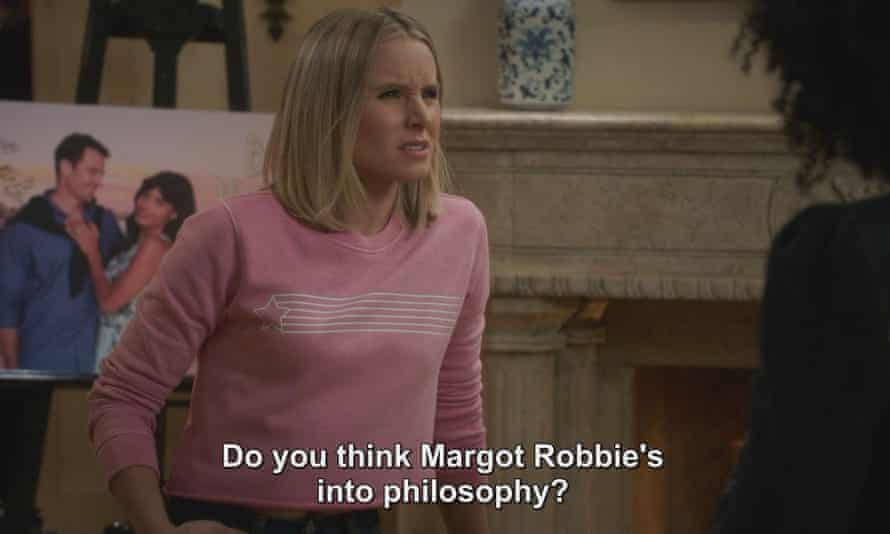
Among the many replies DG received were lots of teenagers and people in their early on 20s who said they liked using subtitles considering it allowed them to multitask. Besides, with TV shows often plagued with claims of unintelligible ambience sound (Shane Meadows' The Virtues being the latest), it's piffling wonder that subtitles seem to be all around.
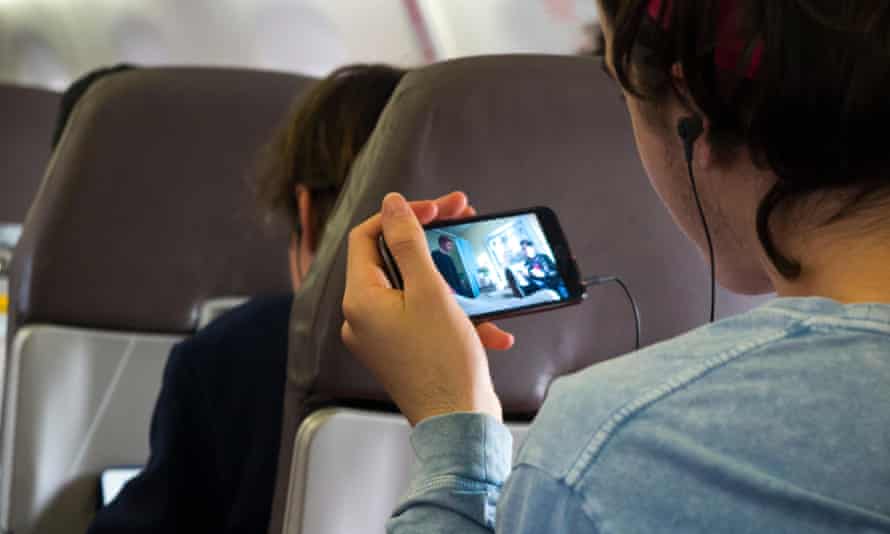
A startling Ofcom study from 2006 estimated that, of the 7.v million Uk TV viewers using subtitles, just 1.5 million had a hearing impairment. That figure may be 13 years old, but the regulator says: "Our understanding is that subtitle utilise has increased equally the use of smart/mobile devices has increased, as more and more than people watch programmes or videos on commutes."
Christina McDermott, a social media manager, explains the shift in more item. "In that location's zippo worse than sitting somewhere tranquility, simply for some viral content your mum'due south put on Facebook to start blaring out at you lot," she says, calculation that subtitles tin can hook in casual viewers. "From an industry perspective, we're ever looking for the 'pollex-stoppers' – $.25 of brusque video that will make people stop what they're doing and spotter until the terminate." Up to 85% of Facebook videos, she adds, are watched without audio – and thus with subtitles.
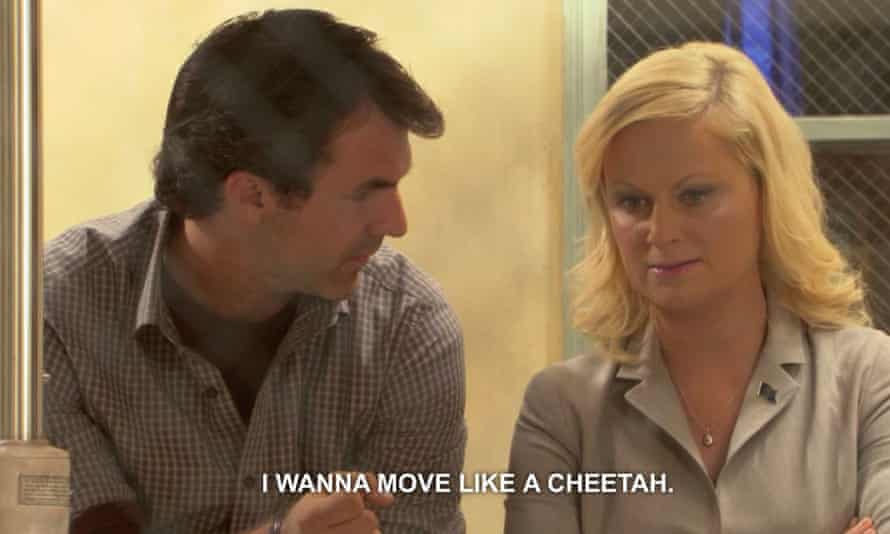
This sense of grabbing audiences' attention through text rather than visuals led New York Times author Amanda Hess to point out that "viral video-makers are reanimating some of the aforementioned techniques that ruled silent moving-picture show over 100 years ago".
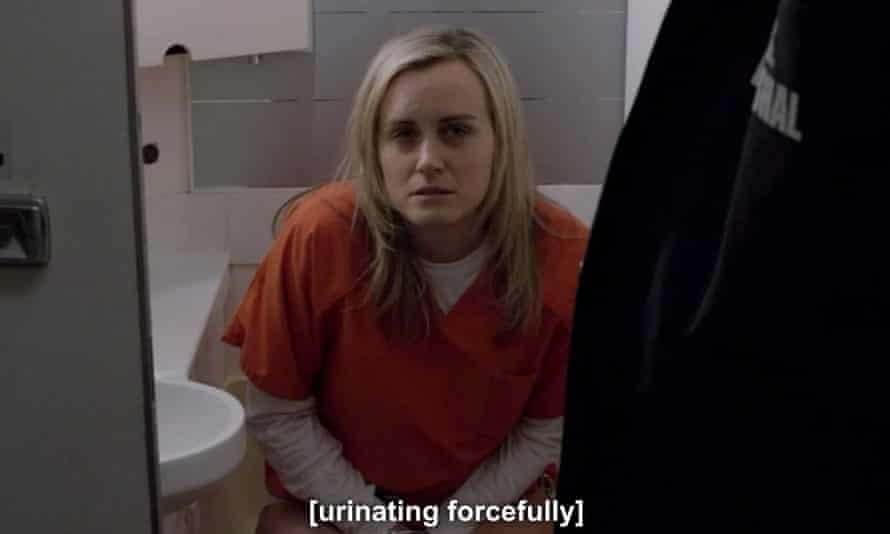
Increasingly, social media is the lens through which people picket TV – and Telly then pushes them dorsum to social media. Have Love Isle, which spawns a new glut of Instagram influencers every series. Deep inside this feedback loop is a meme culture that means, if you're quick enough to put a funny screengrab online consummate with explanation, you could be looking at likes and retweets well into five figures. And, of class, there are those No Context accounts that even plan-makers have dabbled in. Netflix's official Twitter account for its testify Sexual practice Educational activity is called "no context sex activity pedagogy" and just features grabs from the show.
Mollie Goodfellow, a writer and social media artistic, believes keeping the subs on is "definitely easier than doing captioning yourself". Only that's not the only reason she watches with words. "I've used subtitles since my teens," she says. "I don't have anything [such equally ADHD] diagnosed. Merely I notice that if there's other stuff happening in the area I'm trying to watch, or if the movie is a loud action film, it'southward easier for me to go along up if the subtitles are on."
Intriguingly, it seems that subtitles seem to appeal particularly to children. Henry Warren is the co-founder of Tots, or Turn on the Subtitles, a new campaign urging programme-makers to add captions to shows aimed at primary school pupils. Inspired by research conducted by an Indian academic, Brij Kothari, Warren and his business partner Oli Barrett decided to run into whether broadcasters would take notation of stats linking subtitles to hugely increased levels of literacy.
"The numbers [in existing studies] looked also proficient to be true," Warren tells me between meetings with leading UK broadcasters. "So we tried to understand it a bit more than, and establish there were a number of unlike eye-tracking experiments that backed this upwards. Once kids can decode five words or more, they practice start reading along."
Warren sees Tots' part as "joining the dots" between academic bodies such equally the National Literacy Trust and big broadcasters, initially with the aim of making subtitling the norm for programmes aimed at children anile six to 10. "I think it will come to a point where nosotros don't call up about it," he says. "They volition simply be there."
But what do deaf people call back? Anna Gryszkiewicz, who is 39 and lives in Östergötland in Sweden, was diagnosed with sensorineural hearing loss in her 20s and began using captions. More often than not, she sees the rising in captioning as a positive development: "It has been so much easier to observe or to asking captions today, compared to fifteen years ago." Deaf people, she adds, "have such an advantage living today".
The ascension of big tech brings with it concerns over the quality of subtitling. YouTube uses often garbled, computer-made captions. "My chief worry is the over-conventionalities in engineering science, such as autocaptions," says Gryszkiewicz. "I'1000 an engineer and dear technology, just nosotros cannot lose sight of the social aspects of hearing loss. Linguistic communication, advice and social interactions are complex. The issue of having hearing loss or beingness deafened is different from what hearing people imagine it to be – and the impact on communication is often underestimated.
"I understand that proficient captions and other accessibility features are expensive and it'south not unreasonable to expect into technology to reduce costs, but I promise our opinions are taken seriously when we try to explain what kind of accessibility is helpful and what isn't."
This sense of prioritising which shows do and don't go subtitles, as well as what form they should have, is picked up by Jess Reid from the charity Activity on Hearing Loss. "Ofcom tells us that a third of the UK'south on-demand service providers offer no subtitles at all," she says. "Within the last week, nosotros've had complaints about Britain's Got Talent having subtitles when shown on Tv set – and non having this for on-demand. And that is just ane instance. Nosotros regularly get complaints about popular Boob tube shows, from Game of Thrones to Love Island, where people with deafness and hearing loss are nonetheless kept out of the conversation."
Program-makers, though, exercise have objections. Elliott Arndt, a managing director of music videos and brusque films, has aesthetic concerns almost subtitles. "I like to utilize them equally a graphic chemical element of [a] composition, as well every bit the usual informative tool," he says. "But that'southward non always something I'm after. Sometimes, I'd much rather have to do without and keep an unspoilt image – but the message you're trying to get across just needs it. And so I try to make it a part of the video in an interesting way. I just apply it equally a graphic, where it comes in to underline specific words at different moments. I remember, for a lot of people, it'south hard to experience immersed in the picture if you're having to read something that's 'on' the picture."
Similar many others, though, Arndt agrees that the mainstreaming of subtitles is doing more than skilful than harm, making visual media more accessible, understandable and dynamic. "Making subtitles obligatory could be a really interesting way to push button people to find a new system," he says, "something that's not going to ruin the visual experience but also could exist more tailored to anybody's needs."
Deafinitely Girly is resoundingly positive about the possibilities. "The more than people who use subtitles, the amend," she says. "Information technology would be great if they were mandatory across all streaming services and at least 50% of cinema showings." Such a alter would allow her to come across new releases at the weekend with her hearing married man. Besides, information technology would mean that the norm was inclusive, rather than sectional.
"I find my deafness incredibly isolating at times," says DG. "You miss out on jokes on social media videos, viral clips don't mean anything, and you lot tin't follow the latest news that'southward being alive tweeted. Subtitles being universal would alter that massively."
Source: https://www.theguardian.com/tv-and-radio/2019/jul/21/subtitles-tv-hearing-no-context-twitter-captions

Enviar um comentário for "Me Trying to Read the Subtitles and Watch the Action"