Effects of Using Nintendo Wii (Tm) Exergames in Older Adults a Review of the Literature

Wii or Kinect? A Pilot Study of the Exergame Effects on Older Adults' Concrete Fitness and Psychological Perception
1
Schoolhouse of Journalism and Communication, Jinan University, Guangzhou 510632, China
2
National Media Experimental Teaching Demonstration Center, Jinan University, Guangzhou 510632, China
3
Department of Communication, College of Educational It, South China Normal University, Guangzhou 510631, Mainland china
4
Wee Kim Wee School of Communication and Information, Nanyang Technological University, Singapore 637551, Singapore
*
Author to whom correspondence should be addressed.
Academic Editor: Jose Losa-Reyna
Received: 26 October 2021 / Revised: 24 Nov 2021 / Accustomed: vi December 2021 / Published: viii December 2021
Abstruse
Exergames are now oft implemented amid older adults for wellness purposes. This study aimed to investigate whether playing Kinect and Wii exergames has effects on older adults' concrete fitness and psychological perceptions towards exergames. A total of 23 older participants aged above 60 years were recruited and randomly assigned into two groups, in which they played either Kinect or Wii Bowling exergames for three sessions in ane week. Physiological and psychological measures were collected including centre rate, claret pressure, shoulder flexibility, as well as perceived benefits and intentions for time to come use. Findings indicated that exergames are equivalent to light-intensity exercises, and hence pose no or minimal adventure to older adults. Older adults had a positive attitude towards exergames and have a strong willingness to engage in exergaming on a regular ground. Although no significant platform difference was identified, ascertainment and qualitative findings suggested that Wii might provide a more than intense physical activity than Kinect, while Kinect might obtain a higher perception among older adults than Wii. The study has several practical implications for both health professionals and exergame designers targeting the ageing population.
1. Introduction
The earth population is rapidly ageing. The issue of an ageing population characterized by both longer life expectancy and declining fertility rate has been a growing business organization among researchers and policymakers [one]. With people living ever longer, the challenge is to focus on research that allows the elderly not just to survive, only too to stay good for you [ii]. Studies indicate that social isolation and lack of regular do are amongst the prime factors for deteriorating wellness condition and potential health gamble for the elderly [three]. They evidence that the elderly with a low level of social participation tend to stay at dwelling and have a higher propensity to depression symptoms, which could impair their physical fitness and require clinical attention. The disability to do regularly reduces their physical fitness and imposes a sedentary lifestyle which leads to serious pathophysiological consequences, including muscle atrophy, impaired residue, orthostatic hypotension, and impaired cardiorespiratory function, also as to psychological consequences such every bit apathy, depression and cognitive decline [four].
Over the years, the gaming industry has evolved quickly with the advancements in interactive digital technologies, and digital games no longer just target teenagers or game enthusiasts, but are designed for a wider range of age groups, including the elderly population [v]. The concept of exergames was introduced in the 1980s, which represented the tendency of using consumer digital games for actual exercise [6]. Players are allowed to play games using body gestures or move-sensing devices and proceeds sufficient workout while playing games with each other. Information technology had been suggested that exergames might serve to counteract sedentary lifestyles and raise private health behavior [7]. The advent of movement-detection technologies in exergaming has helped to expand the casher group of exergaming to the elderly [8]. Light to moderate intensity of exercise is often recommended for older adults to maintain good health status and provide sufficient workout for their body [nine]. However, older adults often practice not take adequate access to exercise opportunities and refrain themselves from outdoor exercises [10]. As such, exergaming appears to be a suitable substitute for traditional forms of exercise as it can be conveniently done at domicile. In contempo do, exergaming has often been implemented every bit diverse kinds of health interventions in both home and community settings, to meliorate physiological well-beingness [xi,12]. A systematic review from Peng et al. [13] evaluated these existing studies and found a positive issue of exergames on promoting physical activity. Furthermore, an increasing number of studies have been undertaken to measure the wellness effects for the group of older adults, including physical, cognitive, mental, and social benefits [14,15,16].
Amongst the various exergaming platforms, Nintendo Wii (or 'Wii') and Microsoft Xbox 360 Kinect (or 'Kinect') are the two mainstream ones in the current market place. Both take been designed essentially as interactive games betwixt computer and histrion equally well equally amidst the players themselves. Many previous studies have implemented or tested the impact of exergames based on these ii platforms [17,18,19]. Despite the similarity, there are important differences between Wii and Kinect in both connection mechanism and grade of play. Wii was beginning released in 2006 and utilized a motion sensitive controller to discover three-dimensions (3D), and the 2010 version of the Wii could also detect a role player'southward 3D hand posture using a 3-axis gyro sensor. On the other mitt, Kinect is a totally controller-gratuitous console that supports motility control and voice control by infrared projector and camera [xx]. The lack of a handheld controller by Kinect provides for greater freedom of movement and thus higher levels of physical activity than Wii. Findings from O'Donovan et al. [21] have supported this claim and indicated that playing on Kinect elicited greater energy expenditure than playing on Wii among young healthy adults. Yet no pregnant differences between Kinect and Wii were found on center rate, oxygen consumption, and ventilation among college students [22]. The technological differences across the 2 platforms may further effect in different perception and preferences among users. Since exergaming is still a relatively new concept, the potential impacts have remained unknown of different exergaming platforms, such as Wii and Kinect, amongst older adults.
This paper, therefore, mainly attempts to establish a relationship between exergame platforms and physical fitness among older adults. Specifically, it investigates whether Wii and Kinect exergames would have dissimilar impacts on physiological fitness, perception, and usage intention among older adults.
ii. Materials and Methods
A between-grouping experiment was conducted to assess the touch of playing Wii and Kinect games. Both quantitative and qualitative measurements were involved to monitor the modify in physiological parameters such every bit heart charge per unit and blood pressure and collect psychological parameters such every bit the participants' perception and intention towards playing exergames. The study obtained upstanding blessing from Nanyang Technological University (IRB11/06/08) where the study was originally conducted.
2.1. Participants
The principal inclusive criteria of the recruited participants in this study was aged lx and higher up, equally specified by the World Health Organization [23] for an elderly group. Meanwhile, health screening was conducted earlier the bodily study to appraise the eligibility of included participants. They had to take a systolic blood pressure <130–159 mm Hg and a diastolic blood pressure <95 mm Hg (non on antihypertensive medication). Participants were excluded if they had cognitive inability or mobility limitations to play Wii or Kinect games. They were recruited through the assistance of a local senior action center in Singapore. M*Power was used for the sample size calculation. Based on a priori power analysis, a sample of 24 participants is required to determine a large effect size of f = 0.6 with a power of 0.8 (α = 0.05). Therefore, a total of 23 (16 females and 7 males) participants volunteered to take part in our study, who are agile members of the heart. The sample size was consistent with other existing exergaming studies [24,25]. The age of the participants ranged from 64 to 84 years old, and all of them were in skilful wellness condition and capable of some calorie-free to moderate intensity of practise. The participants were asked to sign the consent class and were given a briefing prior to the showtime of the study. As a token of appreciation, each participant who completed the whole report was awarded SGD$ten equivalent of shopping voucher.
2.2. Intervention
For the game selection, nosotros considered the safety and free energy expenditure for older adults. The game chosen also needed to exist compatible on both Wii and Kinect platforms. Referring to the existing work, bowling, golf, and tennis are oft involved in various elderly studies related to game playing. Particularly bowling has been used to evaluate the effects of digital games for fragile elderly persons [26], as well equally for the study of elderly person'due south experience and preference on motion sensing controllers [27]. The bowling game requires minimum lower limb motion, also referred to every bit a template when programmers pattern new exergames for elderly people. In the theoretical research of exergaming for elderly users, bowling is also recommended, as it is self-paced and intuitive to play [5]. More importantly, the bowling games are available on both the Kinect and Wii platforms. As a result, we selected bowling games in Wii Sports and Kinect Sports every bit the interventions in the current report.
ii.three. Allocation and Process
To prevent option bias, participants were randomly assigned into two experimental conditions (Wii or Kinect) at the start of the experiment. Considering the relatively small sample size, we mainly applied simple randomization with gender stratification, in order to accept an equal mix of males and females in each condition. The allocation procedure also enabled blinding which kept trial participants and game facilitators unaware of the assigned intervention, so that they would not be influenced by that knowledge. In the final report, a total of 23 participants was randomly divided into Wii grouping (n = 11) and Kinect grouping (n = 12). I facilitator was assigned in each grouping to calibrate the panel equally well as take the various measurements for the participants. Each participant was asked to attend 3 sessions in a week. All the sessions were conducted in the local senior action center. In every session, participants were led into the playroom by i of the facilitators according to the bundled sequence and then played the game for about 15 min. This duration is a baseline required for the elderly to achieve low-cal to medium intensity of do afterward which nosotros then recorded the effects of the physiological workload incurred during the exercise with selected fitness indicators. After the elderly participants had completed their sessions, the facilitator measured over again their blood pressure level and heart charge per unit. The entire session for each participant lasted virtually half an hour. The flowchart of this report is shown in Figure 1.
Both the Kinect and Wii participant groups had their sessions held meantime in separate venues. Two video cameras with a tripod stand to tape the entire game session for each participant were set up, and the cameras had been calibrated to capture the shoulder range of motion. In addition, two sofa seats were arranged in the rooms to provide the participants with a comfortable setting to take their heartbeat and claret pressure measurements. The room setup is illustrated in Effigy 2.
two.iv. Measurements
Heart Rate (60 minutes). 60 minutes is the number of heart beats per minute, and the accustomed norm is historic period-related. While exercising, the highest HR that a healthy individual can achieve is defined as Maximum HR (HRmax), which can be theoretically estimated by HRmax = 220 minus age [28]. For example, if a participant is 70 years onetime, his/her HRmax = 220 − 70 = 150. Measuring the practice HR equally the percent of HRmax (%HRmax) is the easiest and most effective method to signal exercise intensity, and exercise intensity is the one of the most important factors for maintaining and developing cardiorespiratory fitness [29]. The exercise intensity has been categorized by Panton et al. [30] every bit follow: (i) Vigorous intensity is 80–90% of HRmax; (ii) Moderate intensity is sixty–79% of HRmax; and (iii) Calorie-free intensity is 35–59% of HRmax. Moderate intensity is usually considered as the target HR zone for this participant's age grouping as they proceeds the almost benefit and minimal risks when they exercise within their target Hr zone. Hence, past monitoring HR, nosotros can make up one's mind whether playing Wii or Kinect can satisfy the workout needs for elderly participants. 60 minutes was measured by a digital wrist sphygmomanometer in the current study.
Blood Pressure (BP). BP was to monitor the status of the participants and the experiment were controlled then that elderly participants did not exercise across their limit. Analyzing BP was able to determine if exergaming posed any danger to the elderly participants, such as an abnormal surge in BP that exceeded the healthy range. In addition, it served equally an actress precaution to ensure that the elderly participants would go through the experiments without suffering from any physical or mental damage. BP included Systolic Claret Pressure level (SBP) and Diastolic Claret Pressure level (DBP), which were also measured by a digital wrist sphygmomanometer in the current study.
Shoulder Flexibility (SF). SF measures the caste betwixt the angles that the arm swings around the body. This is a relatively new research area on the possible benefits that can exist derived from exergaming. Information technology is measured from the highest betoken that the arm reaches at the back of the body to the highest bespeak the arm tin can be lifted to in the front. SF helps discover out if older adults who played Wii or Kinect exergames are capable of stretching to a larger bending after a few sessions. It is also an indicator for concrete comeback. For the SF measurement, we mainly applied the reckoner software "Screen Protractor" to summate the range of motility from the screenshots randomly captured by the video photographic camera throughout the experiment, and results were assessed combining all the sessions. This measurement was adapted from previous studies [31,32] where the validity and reliability had been examined.
Perception of Exergame Benefits (PEB). This assesses participants' perception on the benefits of exergames to their health according to the President'due south Quango on Concrete Fitness and Sports definition [33]. Three perceptual aspects relevant to the study were chosen from the definition, including cardiovascular fettle, flexibility, and muscle strength. They were measured by a post-exergaming survey with a v-bespeak Likert from "Strongly Disagree (1)" to "Strongly Agree (5)".
Intention to Play Exergames (IPE). This was designed to investigate participants' degree of willingness to play Kinect or Wii exergames, and the elderly's routine for physical exercise. This measurement was adapted from the Physical Activeness Questionnaire for Elderly Japanese [34]. The responders fill in their intended frequency and duration of appointment in physical activities or exergames. For the frequency, in that location are four categories on a weekly ground: never, seldom (1 or 2 days), sometimes (3 or iv days), or often (5–seven days) and the options of the elapsing are separated to <thirty min, thirty min to <one h, 1 to 2 h, and more. The answers to the different categories are converted to scores and computed. The score of willingness to exercise exercise was calculated by multiplying the frequency and duration. Before the intervention, the responders were asked to rate the frequency and duration of current physical activity and afterward intervention the responders rated the frequency and duration of their willingness to appoint Wii or Kinect.
The cardiovascular responses of the participants including Hour and BP were measured before and after each session to provide empirical show of any physiological affect from exergaming. SF were collected during the iii sessions. All the results obtained from the first session were used equally a control set to be compared with the results obtained from the 2d and 3rd sessions. Each participant had his or her performance monitored and recorded to facilitate assessment on an private basis. The psychological variables of PEB and IPE were nerveless though a post-study survey with paper questionnaire. Meanwhile, a ane-to-1 interview was further conducted on all the participants afterward they completed the intervention, to provide a deeper understanding of their perception and intention towards playing exergames on Wii or Kinect.
2.v. Data Assay
All the data were analyzed through IBM SPSS version 25. Descriptive statistics was commencement performed, followed by the assumption checks for normality and homogeneity. The results from the Shapiro–Wilk test indicated that all central variables of HR, SBP, DBP, SF, PEB, and IPE appeared to be normally distributed (p > 0.05) in the two experimental groups. The results from Levene's test further demonstrated that these variables had the same variance (p > 0.05) across the two experimental groups. A series of Pearson Chi-square tests and Mixed Analysis of Variance (ANOVA) with post hoc multiple comparisons by Bonferroni correction was used to compare the difference in the two groups. Bonferroni correction shows a detailed relation between each of the two groups, with minimum Type I error brought past α (where = (n, 2)).
3. Results
3.1. Physiological Well-Being
The mean historic period of the 23 participants in the study was 72.47 (SD = 5.93). From the findings, 94.44% of the Kinect participants and 84.85% of the Wii participants reached the HR equivalent of light to moderate intensity. The findings supported that both Kinect and Wii exergames were able to provide light to moderate practise intensity for older adults in a relatively brusk time of 15 min. Surprisingly, a higher pct of Wii participants reached moderate intensity compared to that of Kinect participants, while a lower percentage of Wii participant reached light intensity compared to that of Kinect participants. Nevertheless, the result from the Pearson Chi-foursquare test did non support the statistical significance of observation, with χ2 (1) = 1.84, p = 0.20. Table one indicates the number of participants of different do intensity across the three sessions.
SBP and DBP were assessed to discover out whether exergaming with Kinect and Wii would enhance participants' blood force per unit area to an unhealthy range. The American Heart Association has divers that systolic measurements commonly max out around 190 to 220 Hg mm and diastolic blood pressure should remain most or just under the resting measurement during exercise. Results from the three sessions showed that the average SBP at postal service-test flow were 134.31 (SD = fifteen.19) Hg mm for the Kinect group and 133.85 (SD = eighteen.23) Hg mm for the Wii grouping, respectively. Average DBP at mail-test period were 88.47 (SD = 11.45) Hg mm for the Kinect grouping and 87.97 (SD = 10.58) Hg mm for the Wii group, respectively. Mixed ANOVA tests revealed exergame playing (combining Kinect and Wii groups) led to a significant difference between pre-exam and post-test DBP (F (1, 21) = 11.053, p = 0.003, partial η = 0.345), as well every bit DBP (F (1, 21) = 9.899, p = 0.005, partial η = 0.320). However, no significant interaction event was found between fourth dimension (pre-exam vs. post-exam) and platform (Kinect vs. Wii) among DBP (F (1, 21) = 0.162, p = 0.692, partial η = 0.008) and SBP (F (1, 21) = 0.645, p = 0.431, partial η = 0.030). 1-style ANOVA further suggested that the Kinect group did not accept a significant difference between pre-exam and mail-test DBP (F (1, eleven) = three.26, p = 0.098), while the Wii grouping had a significant difference betwixt pre-examination and post-test DBP (F (1, 10) = 11.19, p = 0.007). Table 2 shows the BP measurement during the three sessions. Furthermore, merely ane instance from the Wii group (effectually 3% of the total cases) had SBP that reached around 195 Hg mm whereas no one from the Kinect group reached the hypertension stage. Taken together, although exergames are unlikely to crusade hypertension or any potential cardiovascular risk on older adults, Kinect exergames may have an even smaller chance when compared to Wii exergames.
The average angle of shoulder flexibility was 112.08 degrees (SD = 14.43) for the Kinect group and 99.94 degrees for the Wii group, yet at that place was no significant departure across the two groups, F (ane,20) = 1.74, p = 0.202. Furthermore, mixed ANOVA did not back up a significant deviation of shoulder flexibility beyond the two groups over the 3 sessions, with a non-significant interaction outcome of F (2, 32) = 1.082, p = 0.338, partial η = 0.051. Despite the not-significant change over fourth dimension, 10 participants (5 from Kinect and 5 from Wii group) were observed to have an increase in their boilerplate shoulder range of motion in session 2 compared to session ane, and eight participants (three from Kinect and 5 from Wii group) had an increase in session iii compared to session ii. Findings from ascertainment also showed that the range of shoulder flexibility for the Wii grouping was more distributed compared to that for the Kinect group (see Figure three).
three.2. Psychological Perception
From the 1-fashion ANOVA tests, the result shows that both Kinect and Wii take a significant impact on the elderly'due south perception of wellness improvement, making them recall they are getting more flexibility in shoulder motion (Kinect: p < 0.001; Wii: p < 0.001) and stronger musculus power (Kinect: p = 0.003; Wii: p < 0.001) after playing the exergame, when compared to a "neutral" group with default value of "3" for each question. No significant differences were identified among the perceived benefits betwixt Kinect and Wii exergames on improving cardiovascular fitness (p = 0.416), flexibility (p = 0.235), and muscle force (p = 0.862). Although quantitative findings did not indicate the departure between the two exergame platforms, qualitative comments from participants showed that they considered Kinect less helpful for cardiovascular purposes as information technology required less effort to play. They did not consider Kinect as aerobically consuming every bit Wii games. Comments from two Kinect participants sum up the experiences:
"I feel easy to throw the ball without holding the controller and the brawl tin can directly go in the direction in which I point." [Kinect Participant 3, 73 years one-time]
"I do not feel tired after playing iii rounds, and I tin even play another 3 rounds." [Kinect Participant 7, 72 years old]
For the intention of exergame usage, participants in the Kinect group had indicated a higher level of willingness to play exergames (Hateful = 5.91, SD = 5.02) than doing traditional physical exercise (Mean = 5.01, SD = 4.17). Similarly, participants in the Wii group had the same tendency of showing a higher willingness to play exergames (Mean = 3.54, SD = 1.58) than doing traditional physical exercise (Hateful = 3.09, SD = ane.62). Nevertheless, Paired T-test findings did non support the significant departure in their preference, with p = 0.625 in the Kinect group and p = 0.435 in the Wii group. As a outcome, we cannot show that the elderly persons were willing to exercise more with exergames compared to physical exercises. Qualitative findings indicated that older adults perceived the same importance for both exergaming and physical exercise, equally commented by some participants:
"I both like Wii and walking, because playing Wii allows me to do practise at home and walking is the other exercise for exterior. If raining I can stay at dwelling house to practice practice or else I can go outside to practise exercise in the fresh air." [Wii Participant 5, seventy-year old]
"It is convenient to do do indoors but sometimes going outside to go fresh air that is important too." [Kinect Participant 5, 69-year old]
"I am willing to do exercise with Wii but also need to go along walking practise." [Wii Participant 7, 79-yr quondam]
In addition, there was no statistical significance in the preference between Kinect and Wii though the Isle of mann–Whitney U-Exam, with p = 0.428. All the same, results from the qualitative interviews did prove the possible impact of technological differences on older adults' intention to apply exergames. Participants from the Kinect grouping displayed a great willingness to play exergames, while those in the Wii group were frustrated by the control of Wii:
"I am happy to play Kinect as it gives me more than confidence when I brand a strike!" [Kinect Participant viii, 84-twelvemonth old]
"I e'er forget to release the button later the swing (arm)." [Wii Participant 9, 64 year-erstwhile]
"I always release the button also early before swing (my arm)." [Wii Participant 10, 80-year sometime]
four. Discussion
Older adults commonly lack physical fitness and hence suffer from severe mobility problems in their upper and lower extremities [ten]. The direct benefit of this study was to establish the positive effects of exergaming on heart charge per unit, claret force per unit area, and shoulder flexibility. The study also examined whether Kinect and Wii bowling games have different influences on older adults' physical fitness and psychological perception towards exergames. The cardiovascular response to playing the Wii and Kinect bowling game was first examined. In the study, the participants consistently reached light to moderate intensity Hr values while playing exergames, equivalent to the recommended physical practise corporeality for the elderly to maintain a balanced and salubrious lifestyle. Furthermore, almost of them approached an Hour level where, theoretically, an increase in cardiovascular fitness could exist achieved with continuous play [35], and was equivalent to achieving light exercise intensity. The findings were consistent with previous studies which indicated that exergaming has elicited light-to-moderate intensity activity amongst other populations, such as overweight individuals [36], adolescents [37], and higher students [38]. Thus, the cardiovascular benefits of exergames were further extended to older adults who often have a high risk of cardiovascular illness. In terms of blood pressure level, none of the elderly participants had a sudden surge in blood pressure level and their blood pressures remained within the rubber range. Although it is non possible to assume that exergaming is totally run a risk-free for older adults, the written report suggested the risk to be rather minimal as feedback from the elderly participants did not indicate any discomfort during the written report. A review from Klompstra et al. [39] also supported the safety of exergame platforms on older adults, by reporting no adverse events occurring in the included studies.
Due to the absence of empirically derived estimates of minimum clinically important differences, Hsu et al. [40] made an a priori determination that a 10-degree comeback in shoulder forrard flexion would stand for a meaningful change. Although continuous whole-trunk movement would be expected to result in loftier energy expenditure and eye rate, the elderly participants did non show significant improvement in their shoulder range of movement. Our recorded results bear witness fluctuations and inconsistency in the exhibited shoulder range of move even for the same participants. There are several potential explanations for this. Offset, the not-significant results might be due to the short experiment phase, while nosotros cannot rule out the possibility that exergames could have a positive affect on elderly shoulder flexibility in the long run. As from the qualitative report, the majority of older adults were aware of their arms being stretched which shows that exergaming might indeed meliorate their shoulder range of motility in the long run and warrants further research. 2nd, the participants tended to be more casual when engaged with exergames as information technology is designed for them to relax. Meanwhile, exergames are not so strict every bit to how the elderly play the games and once they grasped the style the game was played, they could play with much less endeavour.
Older adults were likewise reported to take a positive attitude towards the physical benefits of exergames and expressed loftier willingness to use exergame exercise in the future. Despite exergames being initially designed for the young generation, many studies take found that the ageing population is also interested in playing exergames [41]. A study in Singapore as well suggested a high acceptance of exergames amid older adults [42]. The testify has supported exergames as being a suitable intervention for motivating seniors to exercise more. Still, the results too evidence that they withal valued traditional ways of exercise that cannot be replaced with exergames. There are other important elements in traditional do, such as the embrace of nature or even social interaction with family and friends. Thus, how to comprise these elements in the hereafter exergame design volition demand to exist addressed.
Regarding the platform differences, no significant impacts were identified between Kinect and Wii exergames on older adults' physical fettle and psychological perceptions. In spite of dissimilar technological designs, both Kinect and Wii platforms achieved similar physiological and psychological outcomes. Consequently, the exergame platform is not supported as being an of import factor that influences the benefits for older adults and their perceptions towards exergames. Although not reaching statistically significance, observation and qualitative findings suggested that Wii might provide a more than intense physical activeness than Kinect, while Kinect might obtain a higher perception among older adults than Wii. The results recommend that older adults with dissimilar practise capacity should use unlike exergaming consoles. For those who are capable of higher exercise intensity, Wii is recommended to be used, as it provides a more intense game experience and requires better paw-middle coordination. For the elderly who have decreased motor skills or less endurance for physical exercise, they would exist brash to use Kinect, because of its easy and intuitive operation.
There were, withal, some limitations that could have affected the findings. Get-go, the most difficult claiming of the study is the modest number of participants with unbalanced gender condition. The findings on the platform comparison were less valuable when generalized into other contexts. Second, the historic period range of the study might exist as well wide given a modest group of participants—the concrete and mental conditions between elderly aged 64 and 84 years can be extremely different. A larger sample of older adults with balanced demographic and social backgrounds are proposed in a time to come report with random group. 3rd, we used a between-grouping report design so that participants did not go a take chances to play on both consoles, and this could affect the platform comparison, particularly on the subjective perceptions. Tertiary, the study only involved one type of exergame to ensure equal comparison between the two platforms. It is advisable for future studies to consider more diverse games other than bowling, in gild to enhance the generalizability of the findings. Lastly, the key conclusions need to be interpreted with caution given the constraints of time and resource in the electric current study. A continuous long term tracking study would be preferred to explore the pattern and trend induced by Kinect or Wii, particularly the fitness indicators.
The study has several applied implications for wellness researchers targeting the comeback of quality of life among the ageing population. First, older adults are brash to appoint in exergaming for at least 15 min for each session and 3 times a week to explore the benefits from exergaming, which provide sufficient concrete do for the elderly as recommended by ACSM [43]. 2nd, although exergames would not replace physical exercise, they tin still serve as a good substitute for indoor exercise and provide older adults with a safer grade of practice compared to outdoor exercise. Third, we would recommend exergame designers to impose certain levels of difficulty and challenges to the games adult so that the elderly exert more energy and are motivated to carry on playing. The measurements used in this study also contribute to a practical guideline to evaluate the influence of new exergames on older adults' health conditions. Finally, this study besides represents an interesting starting point to investigate the potential different impacts of diverse exergaming platforms, which could inspire farther research on the newly platforms such every bit Nintendo Switch or PlayStation VR.
Author Contributions
Conceptualization, P.H., C.M. and 50.W.; methodology, J.L., P.H., C.M. and Fifty.W.; software, P.H., C.Thou. and L.Westward.; validation, J.L. and Fifty.50.; formal analysis, J.50. and 50.50.; investigation, P.H., C.Thousand. and Fifty.Due west.; resources, Y.Fifty.T.; data curation, J.L.; writing—original typhoon grooming, J.L.; writing—review and editing, L.50. and Y.L.T.; visualization, P.H., C.Thousand. and 50.W.; supervision, Y.L.T.; project administration, Y.L.T. All authors have read and agreed to the published version of the manuscript.
Funding
In that location is no funding back up for this inquiry.
Institutional Review Board Argument
The study has obtained ethical blessing from the Institutional Review Board of Nanyang Technological Academy where the initial written report was conducted.
Informed Consent Statement
Informed consent was obtained from all subjects involved in the study.
Conflicts of Interest
The authors declare no conflict of interest.
References
- Lee, R.; Mason, A.; Lee, R.; Stonemason, A.; Amporfu, E.; An, C.-B.; Bixby, 50.R.; Bravo, J.; Bucheli, M.; Chen, Q.; et al. Is low fertility really a trouble? Population crumbling, dependency, and consumption. Science 2014, 346, 229–234. [Google Scholar] [CrossRef] [PubMed]
- Butler, R.N. Population aging and health. BMJ 1997, 315, 1082–1084. [Google Scholar] [CrossRef] [PubMed]
- Chan, A.; Ostbye, T.; Malhotra, R.; Malhotra, C. Social Isolation, Health and Lifestyles Survey 2009. Available online: http://hssr.knuckles-nus.edu.sg/projects/social-isolation-health-and-lifestyles-survey-2009 (accessed on three May 2020).
- Blocker, W. Maintaining functional independence past mobilizing the aged. Geriatrics 1992, 47, 42. [Google Scholar] [PubMed]
- Ijsselsteijn, W.; Nap, H.H.; Kort, Y.D.; Poels, M. Digital game blueprint for elderly users. In Proceedings of the 2007 Conference on Time to come Play, Toronto, ON, Canada, xv–17 November 2007; pp. 17–22. [Google Scholar]
- Sinclair, J.; Hingston, P.; Masek, M. Considerations for the design of exergames. In Proceedings of the fifth International Briefing on Computer Graphics and Interactive Techniques in Commonwealth of australia and Southeast Asia, Perth, Western Australia, i–iv December 2007; pp. 289–295. [Google Scholar]
- Rohr, Fifty.Due east.; Card, A. Impact of active schools interventions in St. John's, NL. In Proceedings of the International Society for Behavioural Nutrition and Physical Action Conference, Banff, AB, USA, xv–xviii June 2022. [Google Scholar]
- Larsen, L.H.; Schou, L.; Lund, H.H.; Langberg, H. The Physical Upshot of Exergames in Salubrious Elderly—A Systematic Review. Games Wellness J. 2013, 2, 205–212. [Google Scholar] [CrossRef] [PubMed]
- Mazzeo, R.S. ACSM position stand on exercise and physical activity for older adults. Med. Sci. Sports Exerc. 1998, thirty, 992–1008. [Google Scholar] [CrossRef]
- McPhee, J.Due south.; French, D.P.; Jackson, D.; Nazroo, J.; Pendleton, N.; Degens, H. Concrete action in older age: Perspectives for good for you ageing and frailty. Biogerontology 2016, 17, 567–580. [Google Scholar] [CrossRef] [PubMed]
- Toulotte, C.; Toursel, C.; Olivier, North. Wii Fit® grooming vs. Adjusted Physical Activities: Which ane is the most appropriate to amend the balance of independent senior subjects? A randomized controlled study. Clin. Rehabil. 2012, 26, 827–835. [Google Scholar] [CrossRef] [PubMed]
- O'Connor, T.J.; Fitzgerald, S.G.; Cooper, R.A.; Thorman, T.A.; Boninger, M.L. Does computer game play aid in motivation of practise and increment metabolic activity during wheelchair ergometry? Med. Eng. Phys. 2001, 23, 267–273. [Google Scholar] [CrossRef]
- Peng, W.; Crouse, J.C.; Lin, J.H. Using active video games for physical activity promotion: A systematic review of the current state of research. Health Educ. Behav. 2013, twoscore, 171–192. [Google Scholar] [CrossRef] [PubMed]
- Stojan, R.; Voelcker-Rehage, C. A Systematic Review on the Cognitive Benefits and Neurophysiological Correlates of Exergaming in Good for you Older Adults. J. Clin. Med. 2019, 8, 734. [Google Scholar] [CrossRef]
- Li, J.; Erdt, M.; Chen, 50.; Cao, Y.; Lee, S.-Q.; Theng, Y.-L. The Social Effects of Exergames on Older Adults: Systematic Review and Metric Assay. J. Med. Net Res. 2018, 20, e10486. [Google Scholar] [CrossRef]
- Pacheco, T.B.F.; de Medeiros, C.S.P.; de Oliveira, V.H.B.; Vieira, Eastward.R.; de Cavalcanti, F.A.C. Effectiveness of exergames for improving mobility and balance in older adults: A systematic review and meta-analysis. Syst. Rev. 2020, nine, 163. [Google Scholar] [CrossRef] [PubMed]
- Vernadakis, Due north.; Papastergiou, M.; Zetou, Eastward.; Antoniou, P. The impact of an exergame-based intervention on children's primal motor skills. Comput. Educ. 2015, 83, 90–102. [Google Scholar] [CrossRef]
- Bell, C.S.; Fain, E.; Daub, J.; Warren, S.H.; Howell, Southward.H.; Southard, K.Due south.; Sellers, C.; Shadoin, H. Effects of Nintendo Wii on Quality of Life, Social Relationships, and Confidence to Forestall Falls. Phys. Occup. Ther. Geriatr. 2011, 29, 213–221. [Google Scholar] [CrossRef]
- Brichetto, One thousand.; Spallarossa, P.; Carvalho, M.50.L.; Battaglia, M.A. The consequence of Nintendo® Wii® on residue in people with multiple sclerosis: A pilot randomized control study. Mult. Scler. J. 2013, 19, 1219–1221. [Google Scholar] [CrossRef]
- Microsoft. Kinect Setup. Bachelor online: http://support.xbox.com/en-United states of america/xbox360/kinect/kinect-sensor-setup (accessed on iii May 2020).
- O'Donovan, C.; Hirsch, Eastward.; Holohan, E.; McBride, I.; McManus, R.; Hussey, J. Energy expended playing Xbox KinectTM and WiiTM games: A preliminary report comparing single and multiplayer modes. Physiotherapy 2012, 98, 224–229. [Google Scholar] [CrossRef]
- Scheer, K.S.; Siebrant, Southward.M.; Brown, Chiliad.A.; Shaw, B.S.; Shaw, I. Wii, Kinect, and Motion. Heart Rate, Oxygen Consumption, Energy Expenditure, and Ventilation due to Different Physically Active Video Game Systems in College Students. Int. J. Exerc. Sci. 2014, 7, 22–32. [Google Scholar] [PubMed]
- WHO. Definition of an Older or Elderly Person. Available online: http://www.who.int/healthinfo/survey/ageingdefnolder/en/index.html (accessed on iii May 2020).
- Dove, Eastward.; Astell, A.J. Kinect Project: People with dementia or mild cerebral impairment learning to play group motion-based games. Alzheimer's Dement. Transl. Res. Clin. Interv. 2019, five, 475–482. [Google Scholar] [CrossRef] [PubMed]
- Yang, C.-G.; Chen Hsieh, J.; Chen, Y.-C.; Yang, S.-Y.; Lin, H.-C.K. Effects of Kinect exergames on balance grooming amid community older adults: A randomized controlled trial. Medicine 2020, 99, e21228. [Google Scholar] [CrossRef]
- Gerling, K.M.; Schulte, F.P.; Masuch, M. Designing and evaluating digital games for frail elderly persons. In Proceedings of the 8th International Briefing on Advances in Computer Entertainment Technology, Lisbon, Portugal, 8–eleven Nov 2011. [Google Scholar]
- Pham, T.P.; Theng, Y.L. Game controllers for older adults: Experimental study on gameplay experiences and preferences. In Proceedings of the International Conference on the Foundations of Digital Games, Raleigh, NC, USA, one June–29 May 2012; pp. 284–285. [Google Scholar]
- Trick, S.M. Physical activity and the prevention of coronary center illness. Bull. N. Y. Acad. Med. 1968, 44, 950. [Google Scholar] [CrossRef]
- Hickson, R.C.; Foster, C.; Pollock, Chiliad.L.; Galassi, T.M.; Rich, S. Reduced training intensities and loss of aerobic power, endurance, and cardiac growth. J. Appl. Physiol. 1985, 58, 492–499. [Google Scholar] [CrossRef] [PubMed]
- Panton, 50.B.; Graves, J.East.; Pollock, Yard.L.; Garzarella, L.; Carroll, J.; Leggett, S.; Lowenthal, D.; Guillen, Chiliad. Relative eye rate, heart rate reserve and oxygen uptake during practise in the elderly. J. Gerontol. Ser. A Biol. Sci. Med Sci. 1992, 51, M165–M171. [Google Scholar] [CrossRef]
- Sahu, D.; Shah, D.; Joshi, M.; Shaikh, S.; Gaikwad, P.; Shyam, A. Validation of an on-screen application-based measurement of shoulder range of motion over telehealth medium. J. Shoulder Elbow Surg. 2021. [Google Scholar] [CrossRef] [PubMed]
- Werner, B.C.; Holzgrefe, R.E.; Griffin, J.W.; Lyons, M.Fifty.; Cosgrove, C.T.; Hart, J.One thousand.; Brockmeier, Southward.F. Validation of an innovative method of shoulder range-of-motion measurement using a smartphone clinometer application. J. Shoulder Elbow Surg. 2014, 23, e275–e282. [Google Scholar] [CrossRef]
- Corbin, C.B.; Pangrazi, R.P. Definitions: Health, Fitness, and Physical Activity. The President's Council on Physical Fitness and Sports Research Digest. Bachelor online: https://eric.ed.gov/?id=ED470696 (accessed on 5 Dec 2021).
- Yasunaga, A.; Park, H.; Watanabe, E.; Togo, F.; Park, S.; Shephard, R.J.; Aoyagi, Y. Development and evaluation of the physical activeness questionnaire for elderly Japanese: The nakanojo study. J. Crumbling Phys. Human action. 2007, xv, 398–411. [Google Scholar] [CrossRef]
- Garber, C.E.; Blissmer, B.; Deschenes, Thousand.R.; Franklin, B.A.; Lamonte, G.J.; Lee, I.M.; Nieman, D.C.; Swain, D.P. Quantity and quality of practice for developing and maintaining cardiorespiratory, musculoskeletal, and neuromotor fettle in apparently healthy adults: Guidance for prescribing exercise. Med. Sci. Sports Exerc. 2011, 43, 1334–1359. [Google Scholar] [CrossRef]
- Höchsmann, C.; Schüpbach, M.; Schmidt-Trucksäss, A. Effects of Exergaming on Physical Activity in Overweight Individuals. Sports Med. 2016, 46, 845–860. [Google Scholar] [CrossRef]
- Graves, 50.; Stratton, One thousand.; Ridgers, N.D.; Cable, N.T. Free energy expenditure in adolescents playing new generation computer games. Br. J. Sports Med. 2008, 42, 592–594. [Google Scholar]
- Siegel, Due south.R.; Haddock, B.L.; Dubois, A.M.; Wilkin, L.D. Active Video/Arcade Games (Exergaming) and Energy Expenditure in Higher Students. Int. J. Exerc. Sci. 2009, ii, 165–174. [Google Scholar]
- Verheijden Klompstra, L.; Jaarsma, T.; Strömberg, A. Exergaming in older adults: A scoping review and implementation potential for patients with eye failure. Eur. J. Cardiovasc. Nurs. J. Piece of work. Grouping Cardiovasc. Nurs. Eur. Soc. Cardiol. 2014, 13, 388–398. [Google Scholar] [CrossRef]
- Hsu, J.K.; Thibodeau, R.; Wong, S.J.; Zukiwsky, D.; Cecile, S.; Walton, D.One thousand. A "Wii" bit of fun: The effects of adding Nintendo Wii® Bowling to a standard exercise regimen for residents of long-term intendance with upper extremity dysfunction. Physiother. Theory Pract. 2011, 27, 185–193. [Google Scholar] [CrossRef] [PubMed]
- Shubert, T.E. The utilise of commercial wellness video games to promote physical activity in older adults. Ann. Longterm Care 2010, 18, 27–32. [Google Scholar]
- Theng, Y.-L.; Dahlan, A.B.; Akmal, Thou.Fifty.; Myint, T.Z. An exploratory study on senior citizens' perceptions of the Nintendo Wii: The case of Singapore. In Proceedings of the tertiary International Convention on Rehabilitation Engineering & Assistive Technology, Singapore, 22–26 April 2009; pp. 1–five. [Google Scholar]
- Mazzeo, R.Southward. Exercise and the Older Developed. ACSM Electric current COMMENT. Available online: https://blogs.umass.edu/bodyshop/files/2009/07/exerciseandtheolderadult.pdf (accessed on 5 December 2021).
Figure 1. Study flowchart.
Figure 1. Report flowchart.
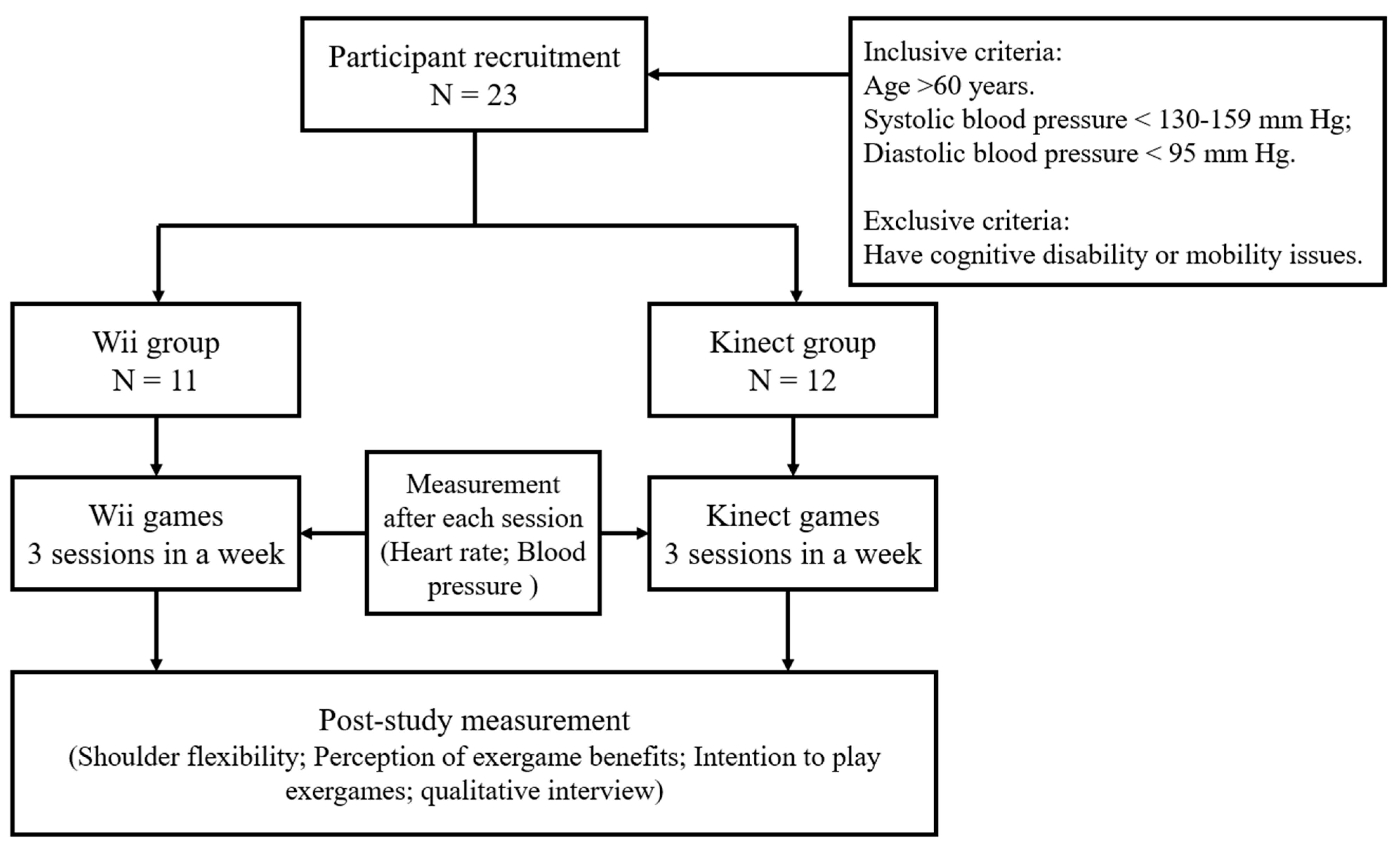
Figure 2. Room settings of the report environment. Annotation: (a) Third person view; (b) Top view.
Figure 2. Room settings of the written report environment. Note: (a) Third person view; (b) Meridian view.
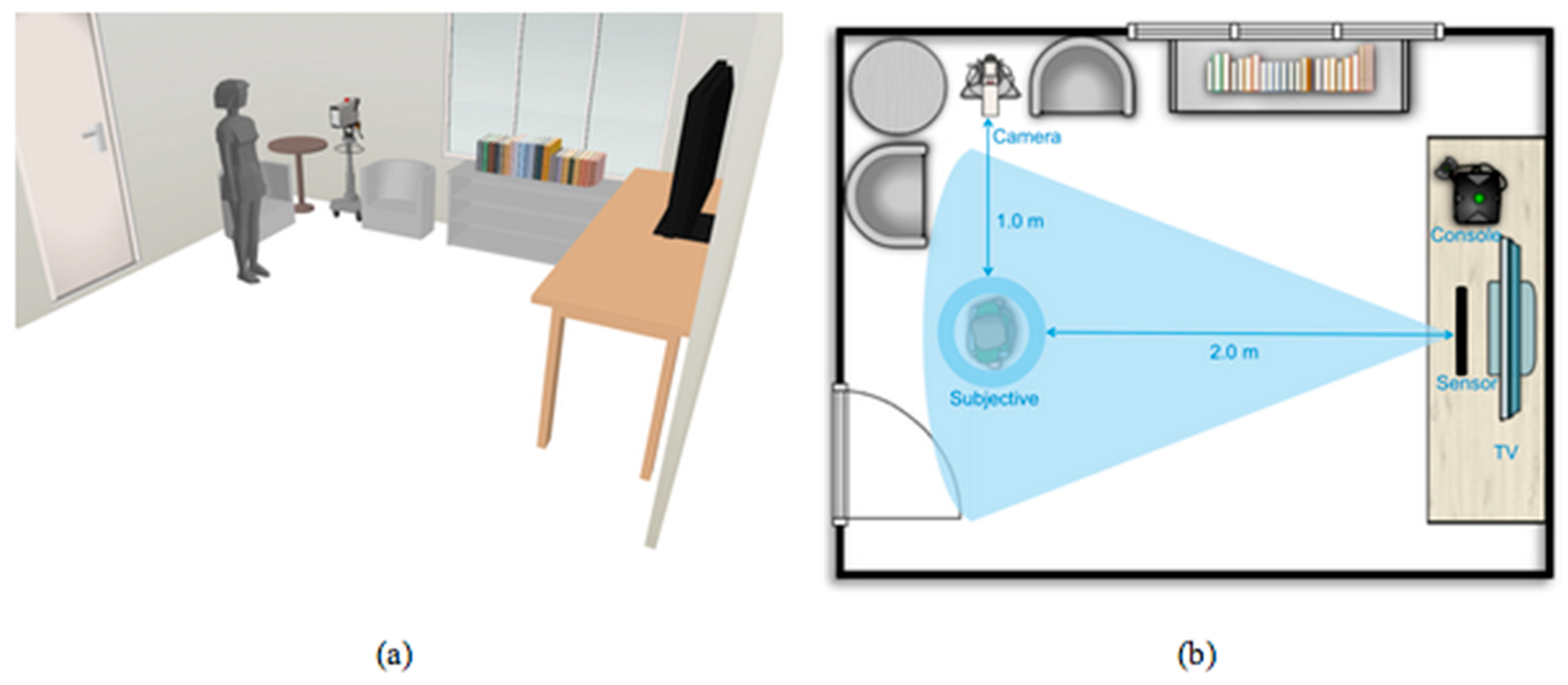
Figure 3. Individual trend of shoulder flexibility. Note: Each color line refers to an private participant.
Figure 3. Individual trend of shoulder flexibility. Note: Each color line refers to an private participant.
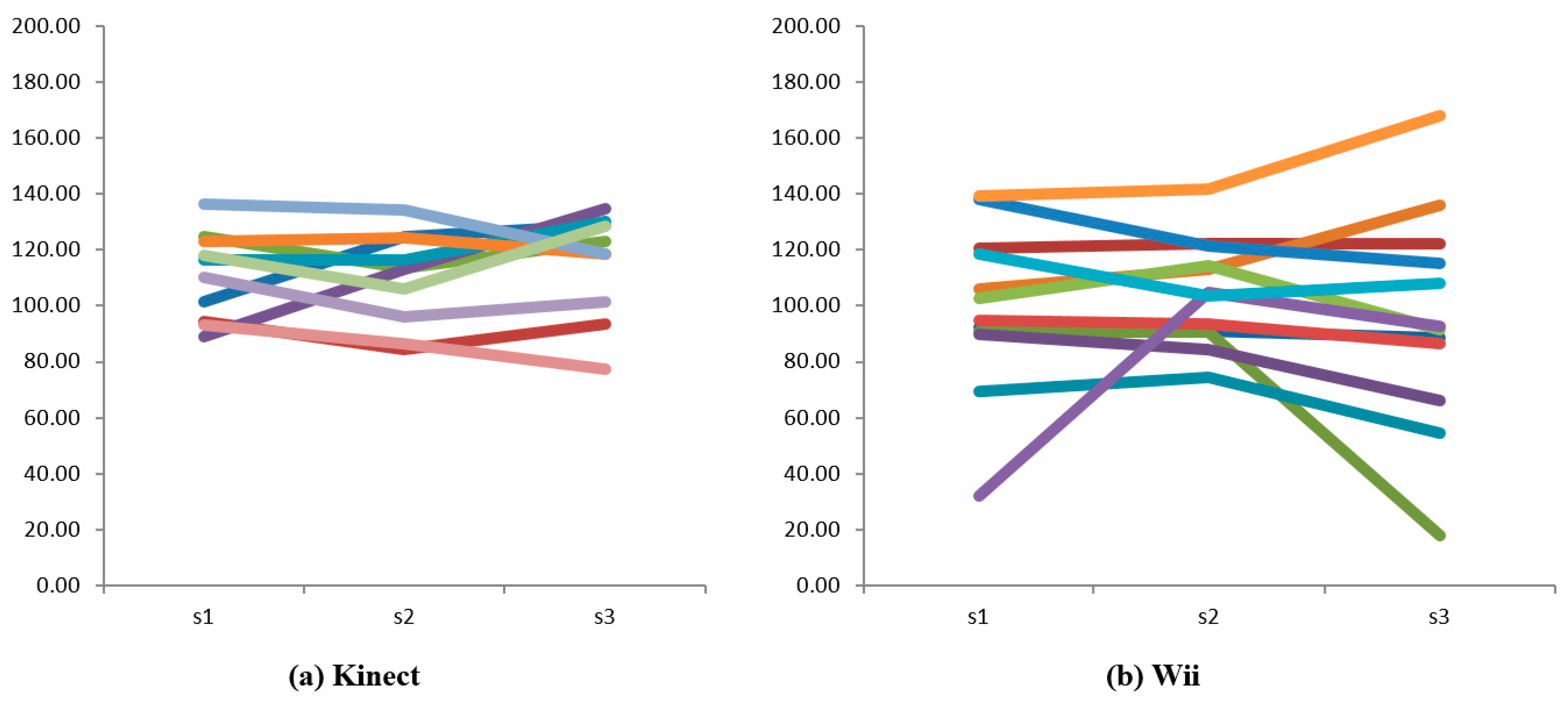
Table ane. Number of participants of dissimilar practise intensity.
Table one. Number of participants of dissimilar exercise intensity.
| Exercise Intensity (by %HRmax) | Session one | Session 2 | Session iii | Average Percentage | ||||
|---|---|---|---|---|---|---|---|---|
| Kinect | Wii | Kinect | Wii | Kinect | Wii | Kinect | Wii | |
| Vigorous and above (>80%) | 1 | 1 | ane | 2 | 0 | 1 | v.56% | 12.12% |
| Moderate (threescore–79%) | one | 3 | ane | two | ii | ii | 11.11% | 21.21% |
| Low-cal (35–59%) | ten | vii | x | 6 | x | 8 | 83.33% | 63.64% |
| Less than light (<34%) | 0 | 0 | 0 | 1 | 0 | 0 | 0% | iii.03% |
| Total | 12 | 11 | 12 | 11 | 12 | 11 | 100% | 100% |
Table ii. Blood force per unit area measurement across the three sessions.
Table 2. Blood pressure measurement beyond the three sessions.
| Fourth dimension | Session one | Session ii | Session iii | Boilerplate | Group Comparing | ||||
|---|---|---|---|---|---|---|---|---|---|
| Kinect | Wii | Kinect | Wii | Kinect | Wii | Kinect | Wii | ||
| SBP Pre-exam | 135.25 (20.44) | 121.55 (20.34) | 130.42 (15.87) | 128.73 (14.28) | 121.50 (18.44) | 124.73 (19.79) | 129.06 (16.00) | 125.00 (xvi.48) | p = 0.556 |
| SBP Mail service-test | 142.92 (21.72) | 137.36 (23.52) | 132.00 (fourteen.47) | 134.64 (22.02) | 128.00 (21.54) | 129.55 (15.83) | 134.31 (15.19) | 133.85 (18.23) | p = 0.948 |
| DBP Pre-examination | 88.75 (14.28) | 80.55 (11.24) | 85.fifty (ten.89) | 84.45 (10.25) | 79.33 (13.49) | 83.82 (11.77) | 84.53 (11.36) | 82.94 (9.72) | p = 0.723 |
| DBP Post-test | 95.25 (17.44) | 89.55 (15.11) | 86.58 (10.02) | 88.09 (14.76) | 83.58 (15.thirteen) | 86.27 (ten.09) | 88.47 (eleven.45) | 87.97 (10.58) | p = 0.914 |
| Publisher'southward Note: MDPI stays neutral with regard to jurisdictional claims in published maps and institutional affiliations. |
© 2021 by the authors. Licensee MDPI, Basel, Switzerland. This article is an open admission article distributed under the terms and atmospheric condition of the Artistic Commons Attribution (CC BY) license (https://creativecommons.org/licenses/by/4.0/).
Source: https://www.mdpi.com/1660-4601/18/24/12939/htm
 Exergames in Older Adults a Review of the Literature)
Enviar um comentário for "Effects of Using Nintendo Wii (Tm) Exergames in Older Adults a Review of the Literature"